

Explore Lisneyland’s Printable Visual Supports!
The Wonderful World of Visual Supports
Visual supports are incredibly powerful tools. Here are some reasons why:
Visual Supports are:
- Concrete, allowing information to be presented more clearly
- They make transitions from one activity to another smoother
- More easily processed than auditory information, which comes and goes in seconds
- powerful tools for building independence and decreasing prompt dependency
- Easy to use and easy to create, even “on the fly” when needed
- convenient for sharing ideas and generalizing strategies to other people and other environments
Visual Supports can be used for a variety of reasons, and in many different ways.
Examples of visual supports:
- Visual Schedules
- Choice boards (pictures or written words informing a person of the options available to them, like a menu at a restaurant)
- First-then schedules (such as, “first clean up, then
- Reminders and to-do lists
- Task analysis (a visual representation of the break down of a complex task)

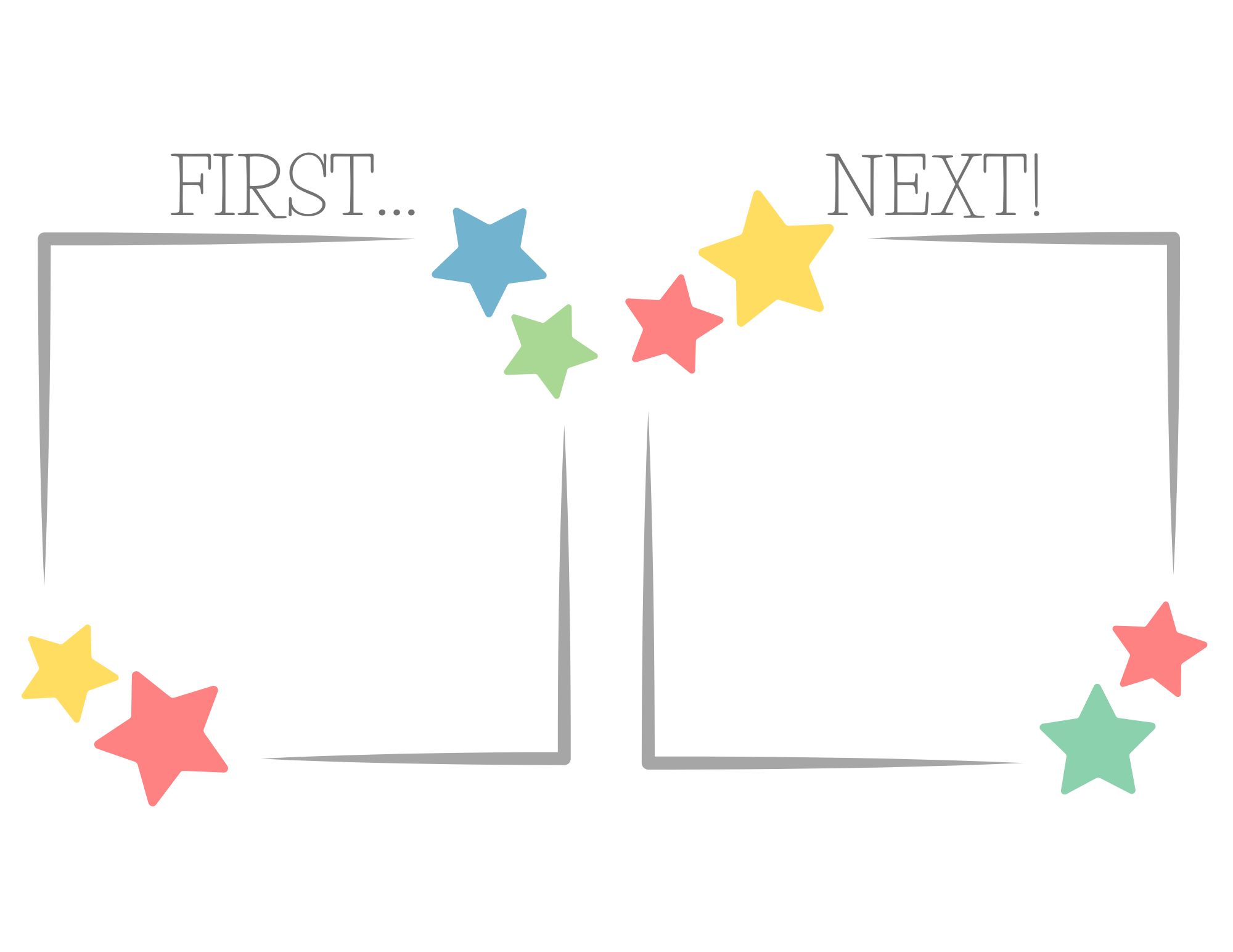
First-Then Visual Support
Print out this simple visual support, then fill it in with common first-then schedules you use regularly, or use this as a sample to create these visuals as you go. Remember that visuals do not have to be fancy to be effective.

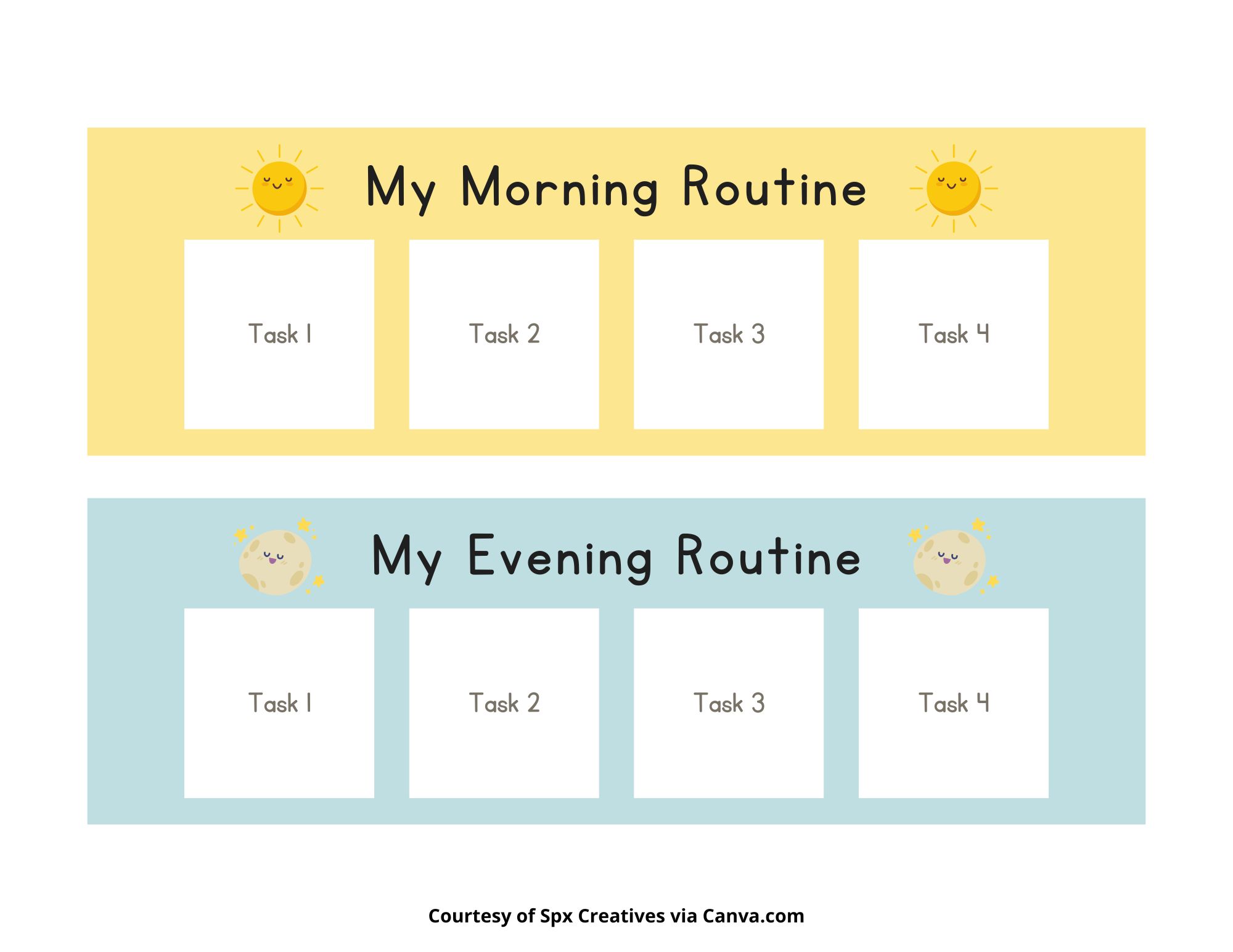
Visual Schedule
This template can be used as a guide to creating a visual schedule for your child to follow.

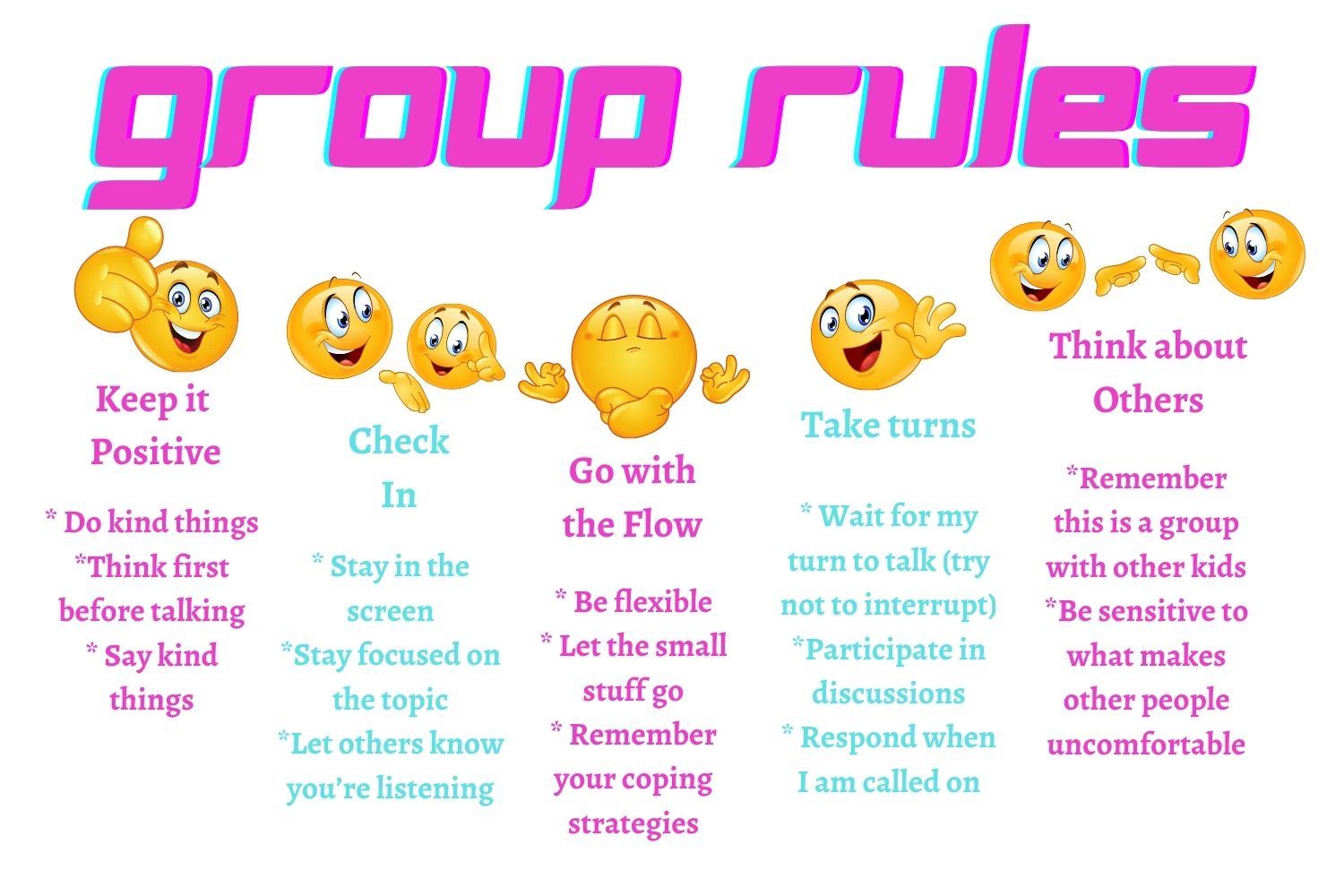
Visual Rules
It is important for rules to be individualized, but this is an example of a visual I created for a social skills group. Note that each rule is kind of general, and I explain each one. See how several behaviors can be accounted for under each rule? Also note, most importantly, that the rules are stated IN THE POSITIVE. For example, it isn’t, “Don’t hit.” Instead, say, “Be gentle.”

Calendar
Calendars can be extremely helpful in preparing a child for unexpected transitions and changes to routine. They can be used to prepare a person and also to refer them to “how many more days” to go until an exciting event such as a vacation. Print out one of these calendars and follow the instructions on the instruction sheet.